
Digital Advertising Insights · Mobile App Insights · Donny Kristianto · November 2026
2026 APAC Shopping Season Playbook: Regional Trends and Growth Strategies
Explore the five key shopping seasons shaping APAC in 2026, from Singles’ Day to Diwali, Lunar New Year, and Ramadan. See how app activity and advertising build around these moments, which markets and categories stand out, and how brands tailor campaigns to local shoppers.

Global shopping app downloads are forecast to reach 6.43 billion in 2026, remaining above 6 billion for a fourth consecutive year. After several years of growth, downloads have leveled off, suggesting acquisition is stabilizing as mobile shopping becomes a familiar part of consumers’ digital routines. Smartphones have made it easier to browse and shop across settings, reducing the effort required to access retailers.
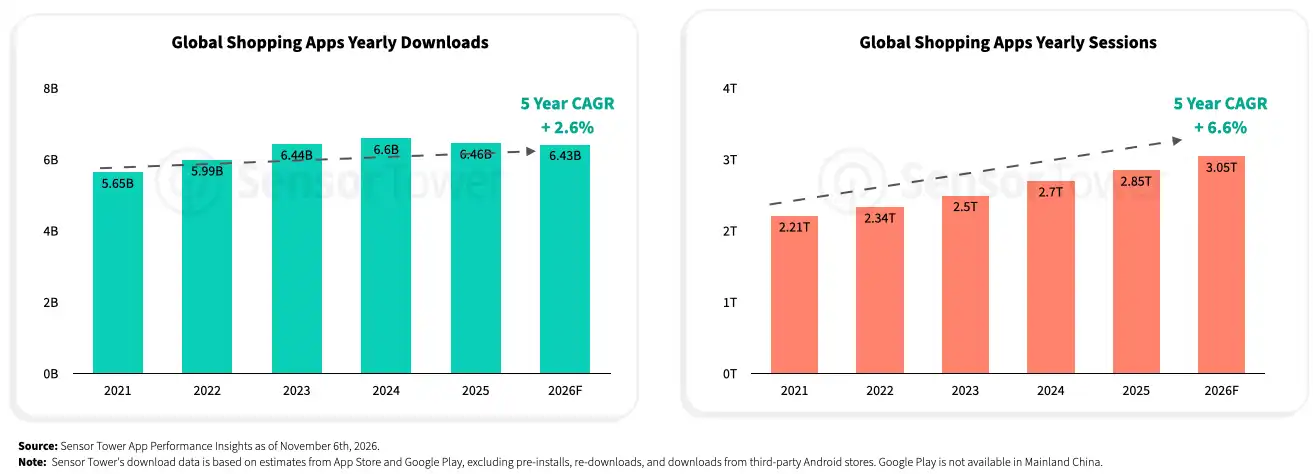
Total Sessions are projected to exceed 3 trillion in 2026, with a five-year CAGR of 6.6%—more than twice the rate for downloads. The gap points to continued growth in app use, as consumers return to shopping platforms more often. Retailers can respond by focusing on relevant offers, straightforward product discovery, and a smooth path to checkout.
Asia Represents the Largest Share of Global Shopping App Downloads and Sessions
Asia is the largest region for shopping app downloads, with about 2.6 billion forecast in 2026, up 2% year over year. India accounts for 40% of that total, followed by China’s iOS market at 19% and Southeast Asia at 18%. North America has the fastest download growth, at 6%, while downloads decline in Europe and Latin America.
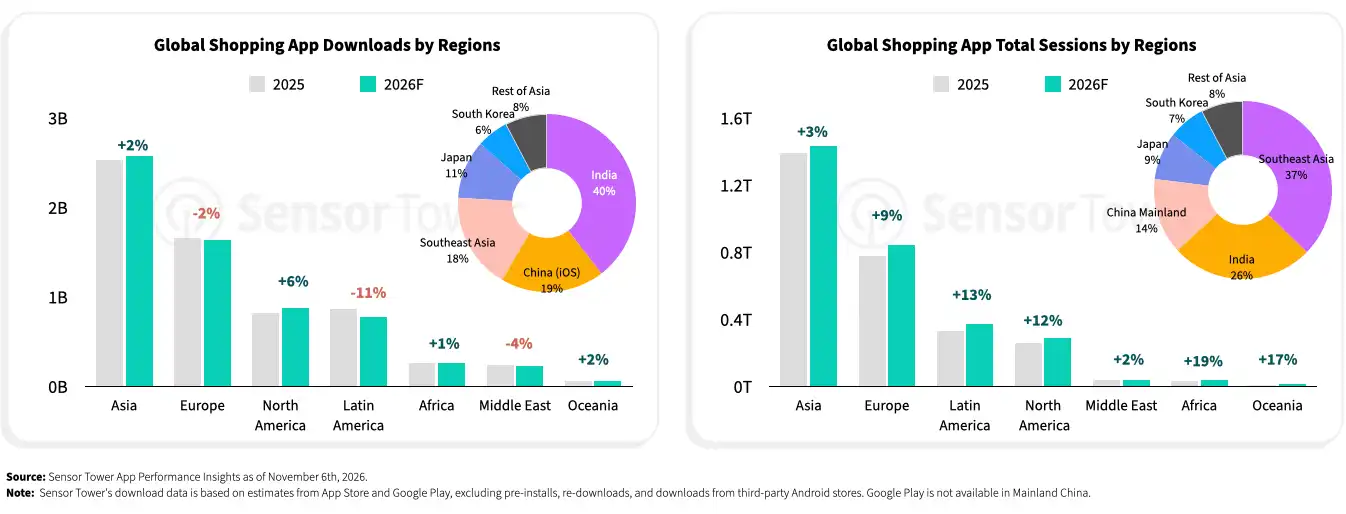
Shopping app sessions are forecast to grow in every region in 2026. Asia remains the largest by activity, with sessions up 3%. Within Asia, Southeast Asia accounts for 37% of sessions, compared with 26% for India. This difference can help marketers balance plans for reaching new users with campaigns that engage existing audiences.
Note: The download data in this report are based on estimated downloads from the App Store and Google Play, excluding pre-installs, re-downloads, and downloads from third-party Android marketplaces. Google Play is not available in Mainland China.
For more insights, please click the button below to view the full report for free.
Shopping Brands’ Q4 2026 Ad Spend Is Projected to Exceed $21 Billion, With Impressions Surpassing 3.8 Trillion as Holiday Competition Intensifies
Global shopping brands’ digital ad spend is projected to reach approximately $21 billion in Q4 2026, up around 17% year over year and 25% from Q3. The forecast builds on the year-end spending peak seen in 2025, highlighting the holiday quarter’s importance for attracting shoppers. Spending is expected to grow faster than impressions, suggesting brands will need to consider both advertising scale and media costs when planning seasonal campaigns.
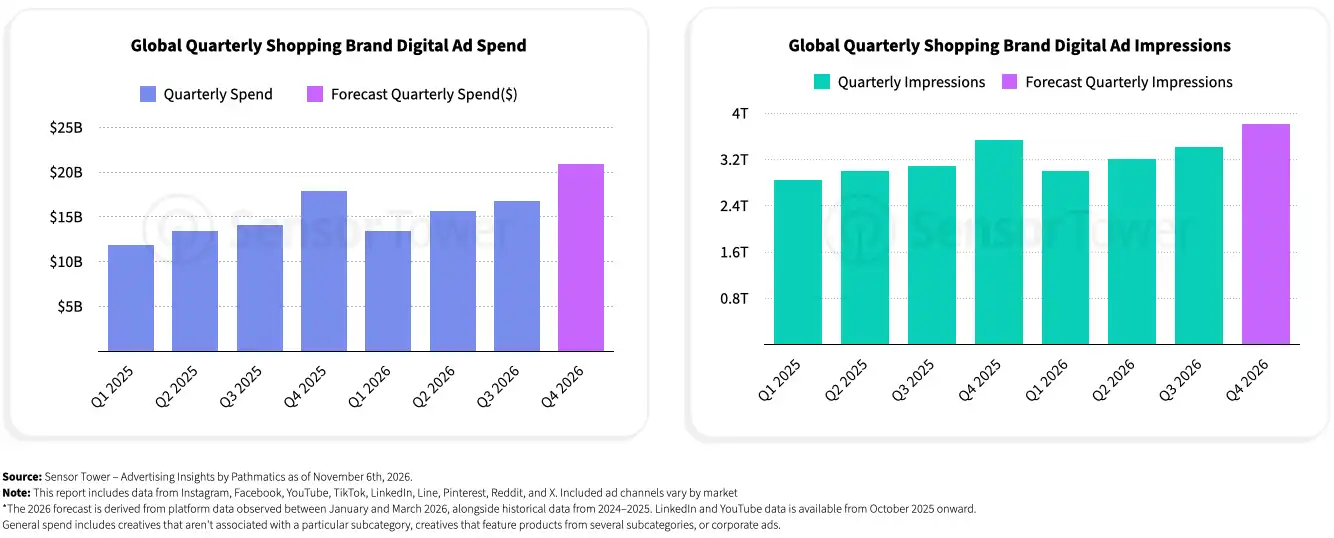
Digital ad impressions are forecast to reach approximately 3.8 trillion, increasing around 8% year over year and 11% from Q3. This would mark the highest quarterly volume shown, expanding shopping brands’ visibility during the holiday season. With both investment and ad exposure rising, reaching shoppers with timely, relevant messaging becomes increasingly important.
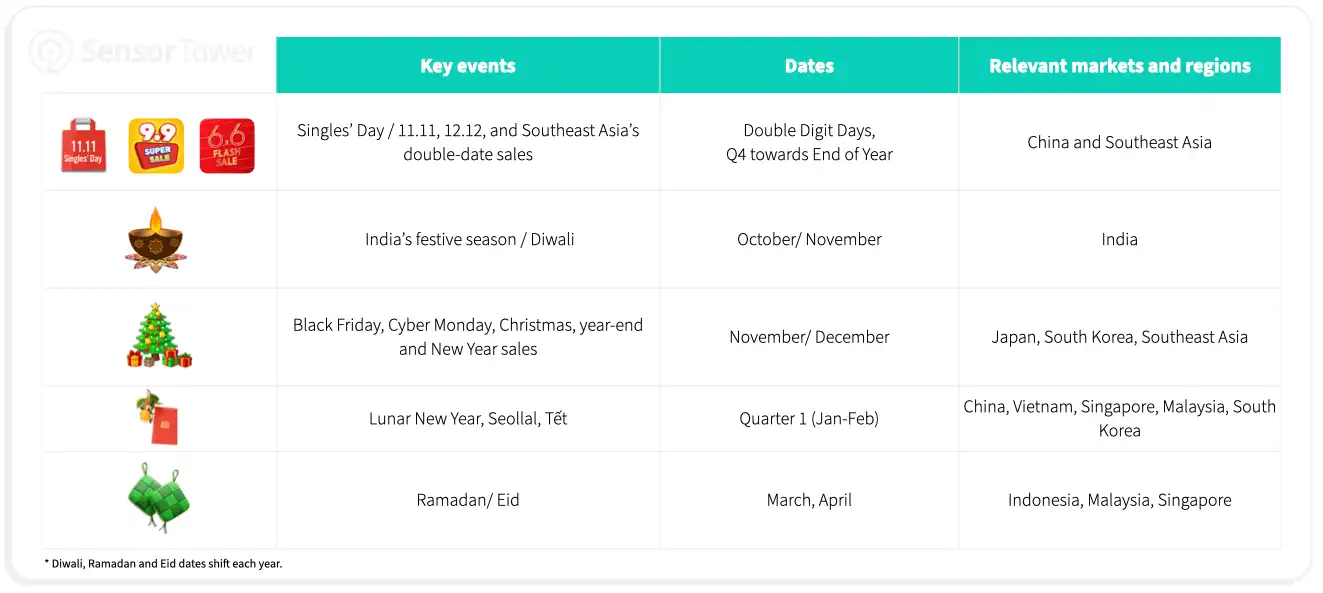
APAC Shopping Peaks Cluster Around Five Campaign Windows
APAC’s shopping season is shaped by global sale events and local festivals throughout the year. These five windows offer a planning framework; timing and market relevance vary, so campaigns should follow each market’s calendar. Double-date sales add recurring opportunities across Southeast Asia in Q4.
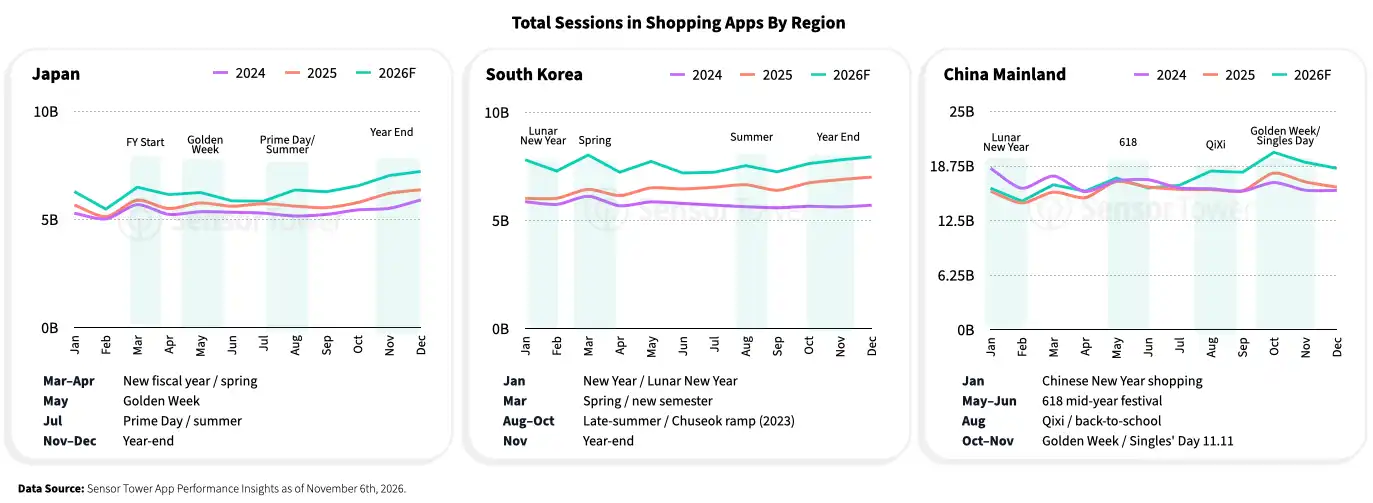
Shopping app sessions reveal distinct seasonal rhythms across East Asia. Japan builds toward November–December, alongside a spring uplift and summer activity, while South Korea combines a March increase with a gradual year-end rise in the 2025 and 2026 series. China shows a different pattern: mid-year activity overlaps with the 618 festival, and the 2026 forecast peaks in October, within the broader Golden Week and Singles’ Day promotional window, before easing. These differences support planning around multiple local shopping occasions rather than applying one year-end campaign calendar across the region.
India’s shopping app sessions rise sharply in September–October, highlighting the festive shopping window as its strongest engagement opportunity, with a higher peak projected for 2026. Southeast Asia follows a more event-driven rhythm: Lunar New Year, Ramadan, and recurring double-date sales generate shorter bursts of activity throughout the year.
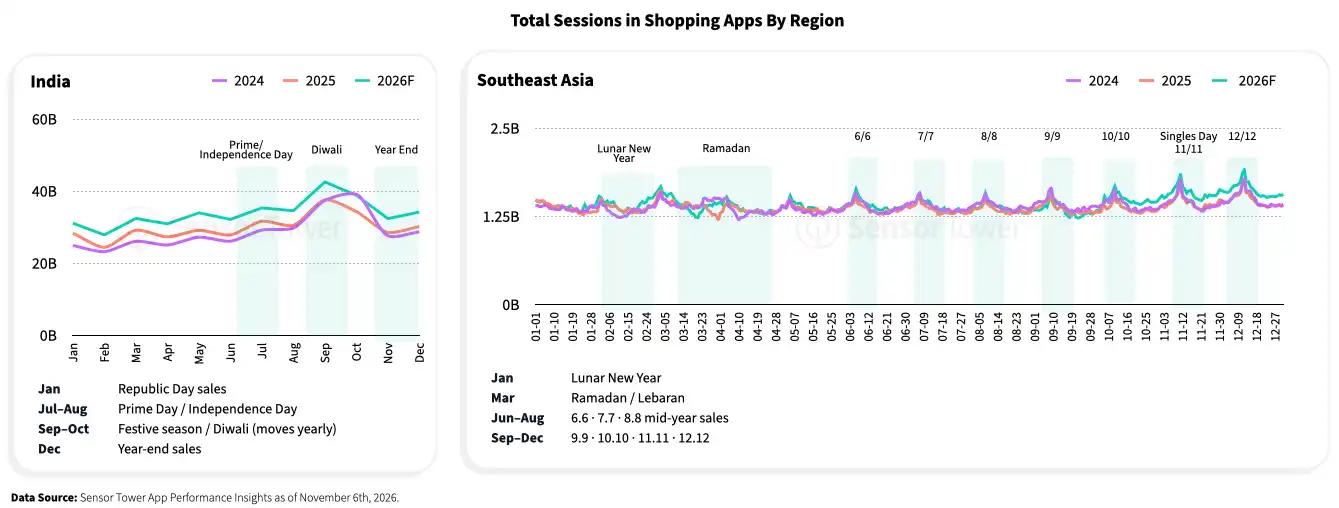
Brands should build sustained momentum ahead of India’s festive season, while planning repeated, locally timed campaigns across Southeast Asia.
Single’s Day (11.11): A Must-Win Moment for Shopping Platforms in China
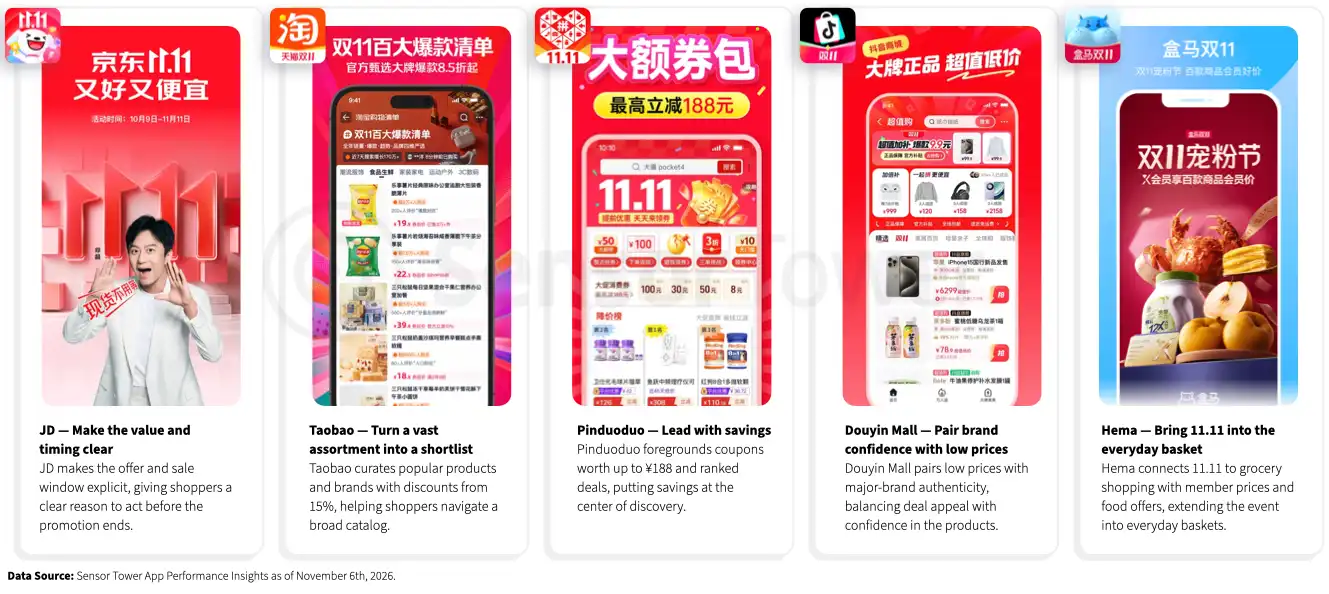
Launched by Alibaba in 2009 with 27 merchants, 11.11 has become a defining retail event in China. Competition starts well before November 11, as platforms use campaign visuals, storefronts, and offers to build attention. The examples show varied ways to make value easy to find—from curated deals to loyalty benefits and everyday essentials.
Southeast Asia Adapts the Double-Date Sale Model to Local Needs
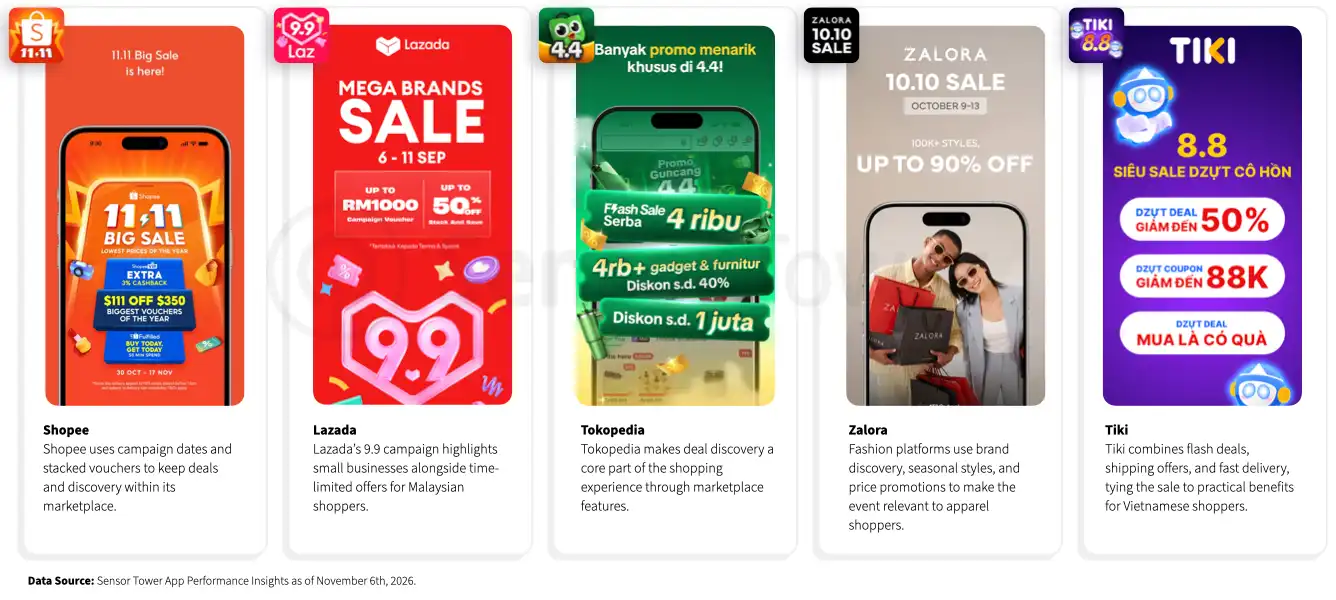
China’s Singles’ Day helped popularize the mega-sale format across Southeast Asia. Regional platforms have adapted it through date-led campaigns, seller support, vouchers, flash deals, and category offers. The examples show how a shared promotional format can still feel local when the value proposition fits the market.
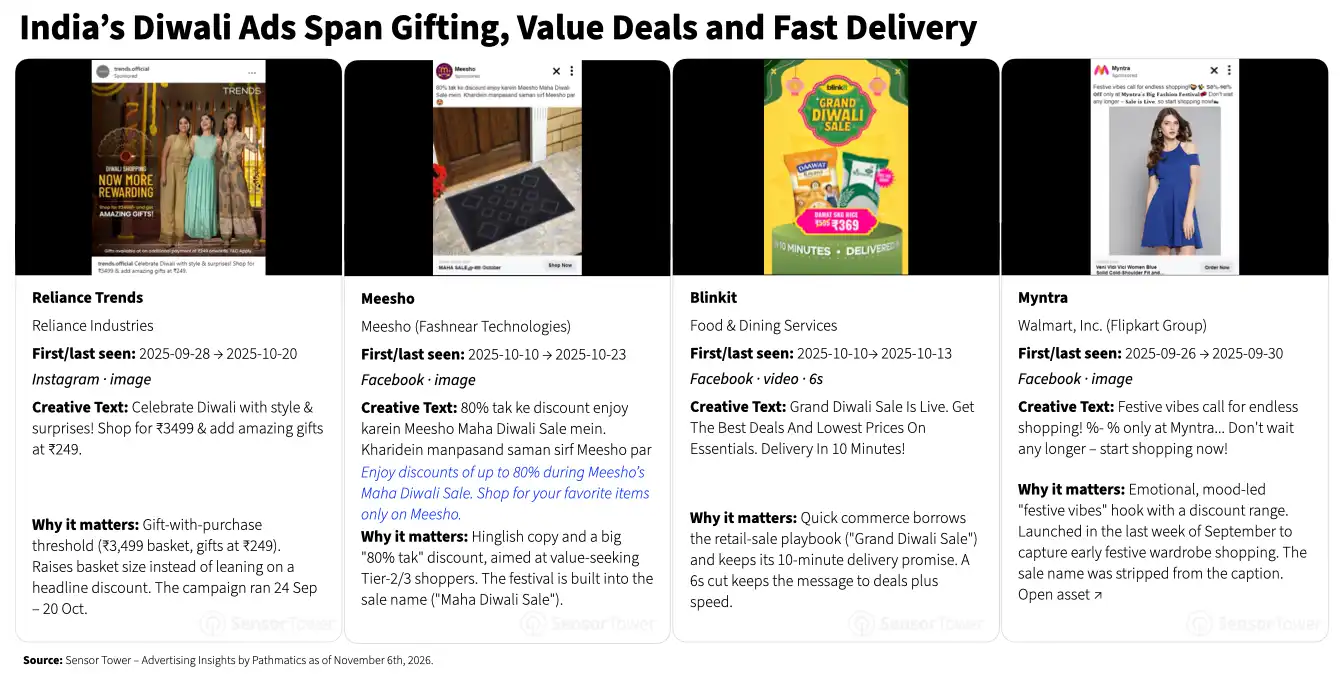
India’s Diwali Ads Span Gifting, Value Deals and Fast Delivery
In India, Diwali shopping spans festive apparel, gifts, and last-minute essentials. These ads meet shoppers at different points in the season, from early fashion promotions and steep marketplace discounts to Blinkit’s promise of 10-minute delivery.
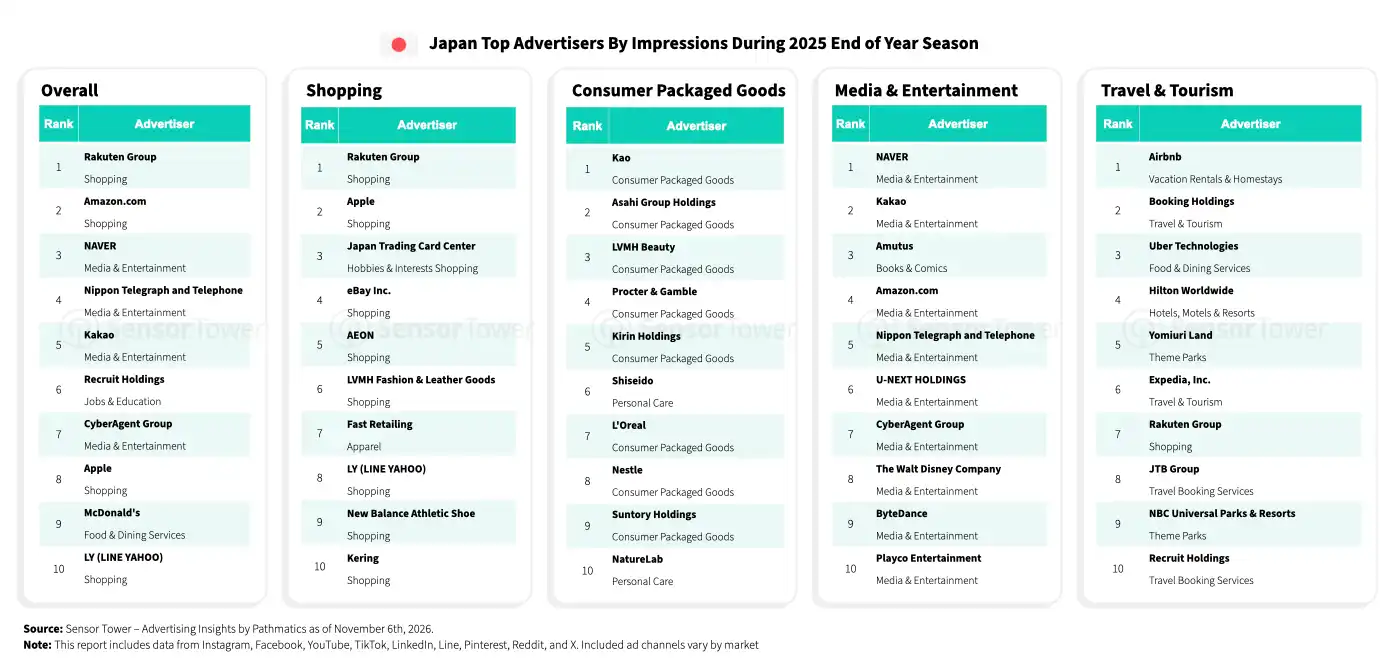
Rakuten Leads as Japan’s Year-End Shopping Ads Span Marketplaces, Electronics, Collectibles, and Fashion
In Japan, year-end activity extends beyond gift buying to travel, leisure, and at-home entertainment. This broader seasonal context helps explain why advertisers range from marketplaces and consumer brands to media platforms, travel services, and theme parks.
South Korea’s Ad Spend Rises Around Chuseok and Year-End Sales
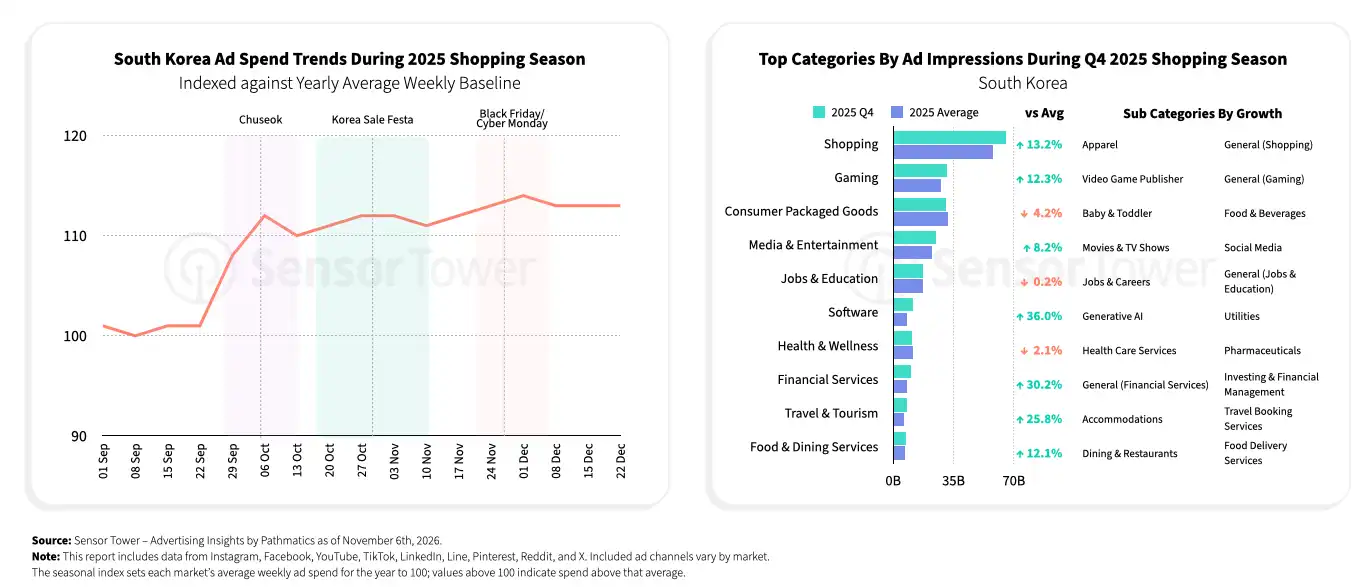
In South Korea, weekly ad spend rises ahead of Chuseok and stays above the annual weekly average through Korea Sale Festa, Black Friday/Cyber Monday, and into December, building across successive shopping moments. Shopping records the most Q4 impressions and sits 13.2% above its 2025 average, while gaming grows 12.3%. Software (+36.0%), financial services (+30.2%), and travel (+25.8%) post the sharpest gains, showing that seasonal advertising extends well beyond retail.
Lunar New Year and Tết Campaigns Reflect Local Traditions
Across Southeast Asia, platforms adapt Lunar New Year campaigns to local customs and shopping needs. In Vietnam, promotions are framed around Tết, with offers for seasonal shopping and household essentials; elsewhere, Lunar New Year messaging connects festive dining, gifting and fashion with sale events.
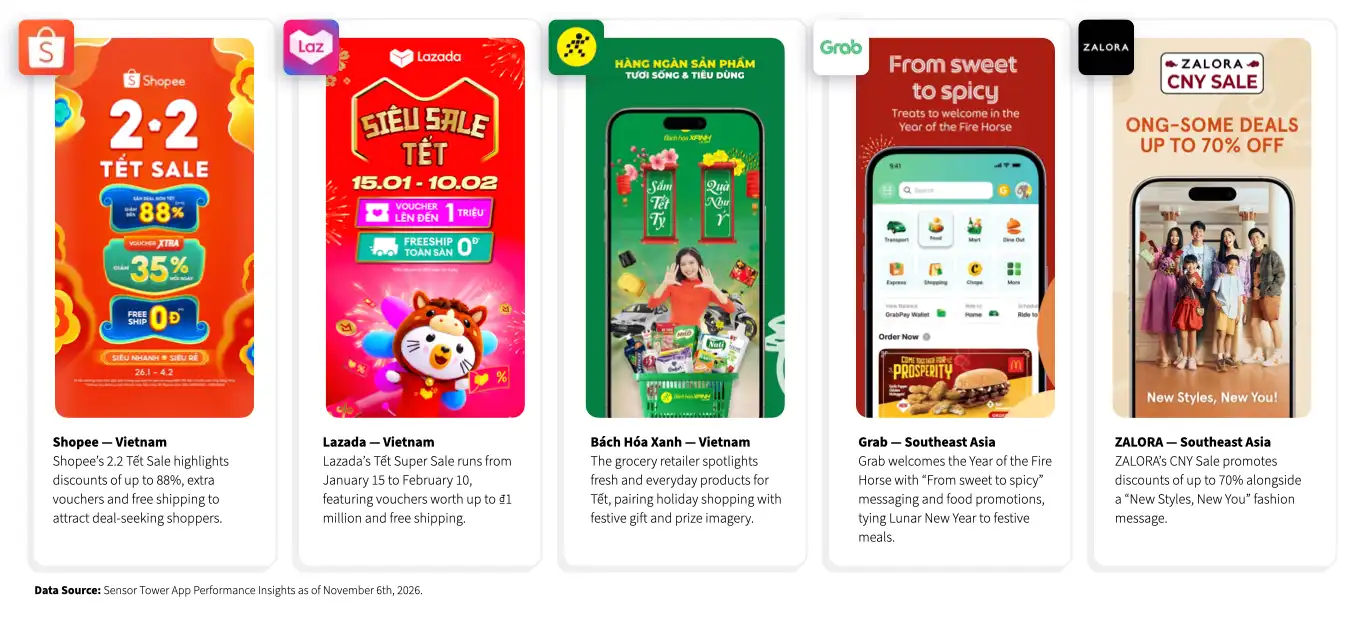
These campaigns offer a snapshot of how brands activate around sale dates. The full report expands the view across APAC, connecting seasonal moments with shifts in shopping activity and advertising.
Read More: Explore the Full APAC Shopping Season
Digital shopping across APAC is expanding across apps and mobile web, while local events create distinct opportunities for brands to connect with consumers. As sessions grow and campaign activity builds around key seasonal moments, understanding differences in market scale, timing, channels, and creative approaches can help teams plan with greater precision.
For a closer look at shopping activity, advertising trends, audience behavior, and campaign examples across APAC, download the full report below.
