

Gaming Insights · Sensor Tower · May 2026
Why Players Play – And Why It Matters For Your Next Decision
Our new Live Ops report, The Psychology Behind Mobile Games, outlines the role of both positive and negative motivations in sustaining engagement, before providing detailed examples of how to harness these psychological mechanisms for your own mobile strategy.

Everyone's been there:
Ten features on the roadmap. Three sprints to ship. Which ones make the cut?
Retention is dropping D14→D30. Add a streak? A new event? More content?
ARPU is flat. Push harder on offers – or redesign the conversion flow?
The problem isn't ideas. It's choosing.
The questions are always clear. The methodology for answering them – usually isn't.
Our report, Why Players Play: The Psychology Behind Mobile Games, will help you answer these questions because it focuses on one of the core foundations of product decisions: Player Motivations. When you understand the basics, you can:
→ make decisions far more consciously → increase the chances of success for a feature or experiment → and reduce guesswork in product planning.
What's inside the report:
(1) The psychology
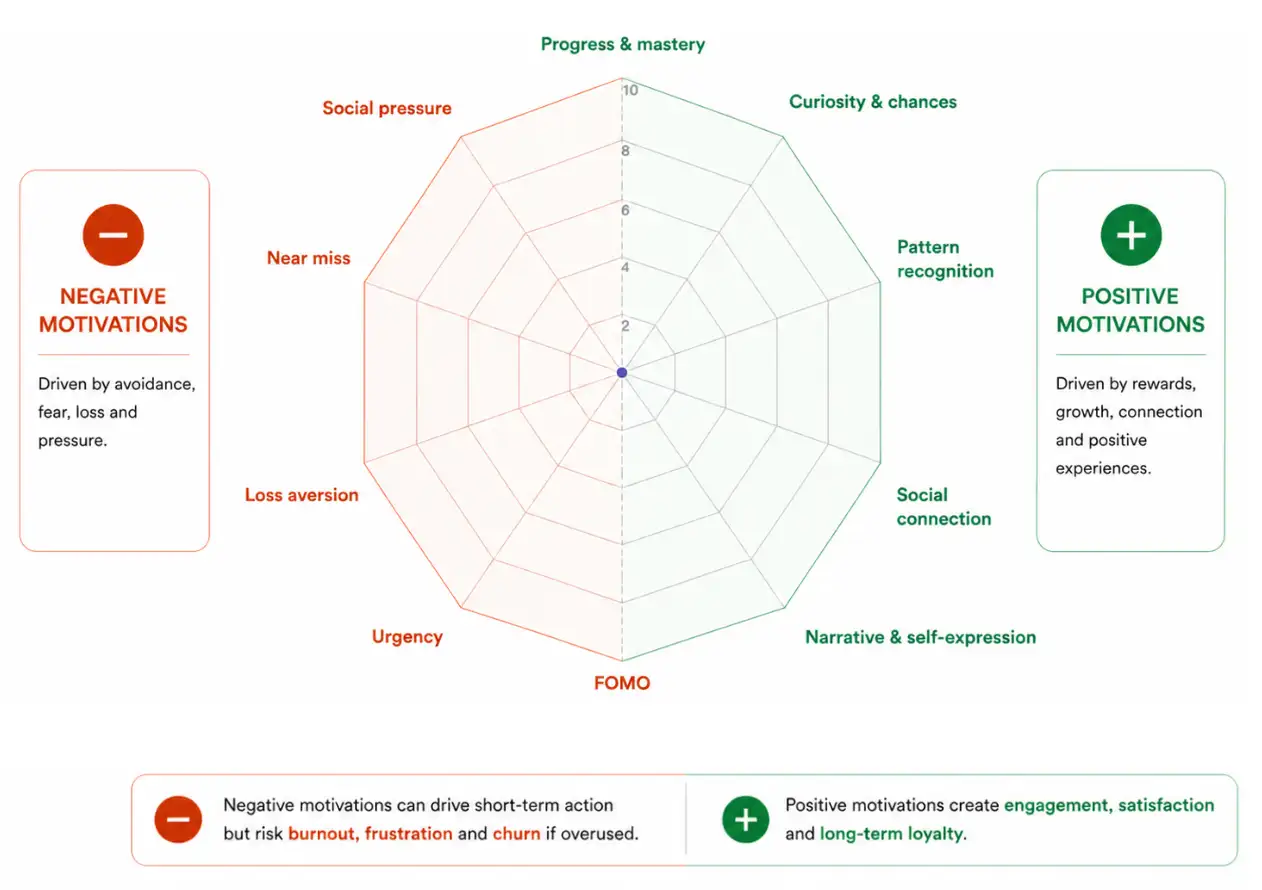
Ten motivation axes – what they are, how they work, and why they matter.
We introduce the Motivation Wheel – a practical framework that maps any game feature, event, or mechanic across 10 motivation axes. Five positive. Five negative.
(2) The breakdown
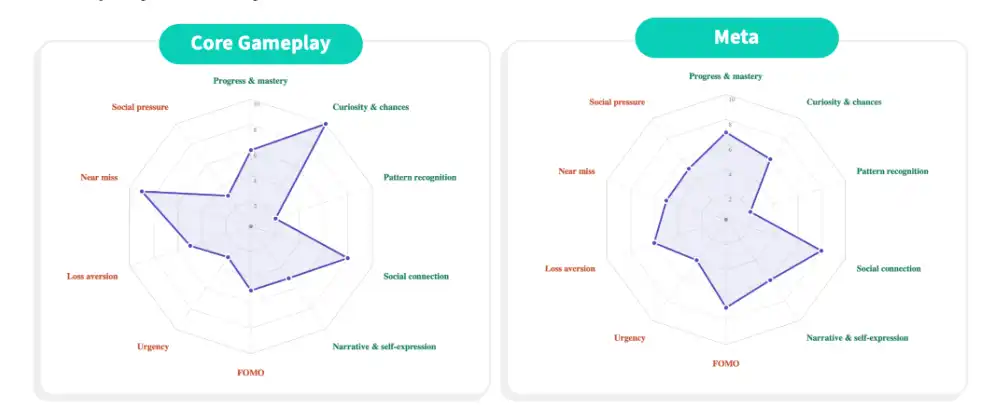
We analyzed different games' core gameplay and meta progression — using examples from Monopoly GO, Royal Match, Block Blast, and more.
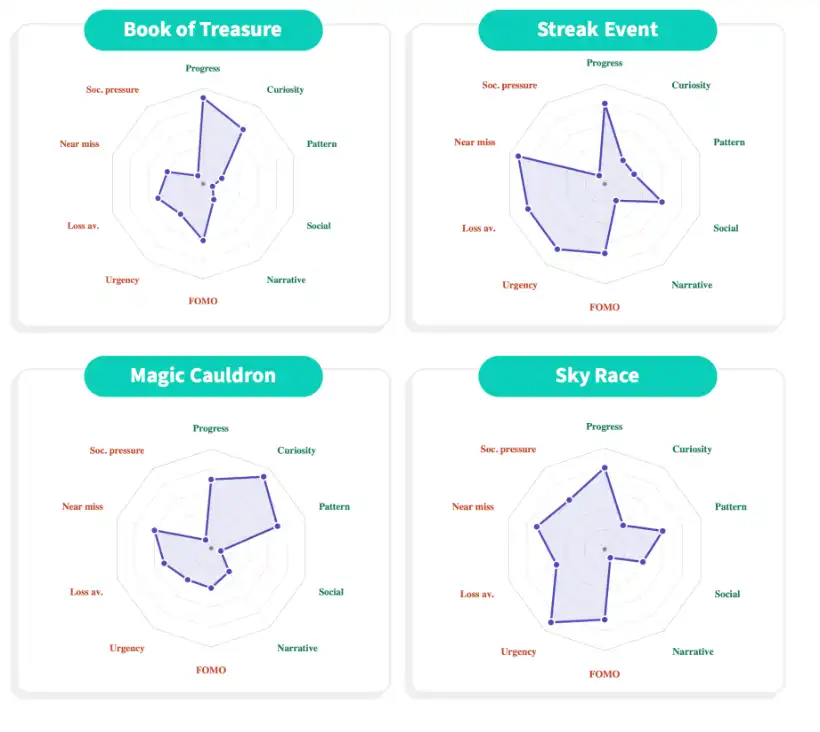
We also mapped dozens of popular LiveOps events – every type scored and explained: progression events, tournaments, mini-games, offers, and more.
One key finding: even events that look similar on the surface often have radically different emotional engines underneath. Those differences explain why some events drive long-term engagement — while others drive short-term spikes followed by churn.
(3) The framework
The Motivation Wheel isn't just an analysis tool. It's a decision-making framework.
How to build it for your game,
How to read the shape, and
What different shapes mean for retention, monetization, and engagement.
When facing a complex design challenge, you need two things:
Define the problem. What is the Goal? What metric are you solving for?
Filter through the right questions.
Five questions that become your framework for the right decision – you'll find them in the report.
(4) The practice
Step-by-step case studies: how to use the framework to solve real business problems.
Example 1: Increase Retention D14 → D30
Example 2: Increase ARPU D7 → D14 Download the full report here.
