
AI Insights · Web Insights · Ian Simpson · April 2026
From Scroll to Sold: What Amazon's Rufus Really Tells Us About Shopper Intent
Not all shopping sessions are created equal, and the latest Sensor Tower data on Amazon’s Rufus assistant makes that impossible to ignore.

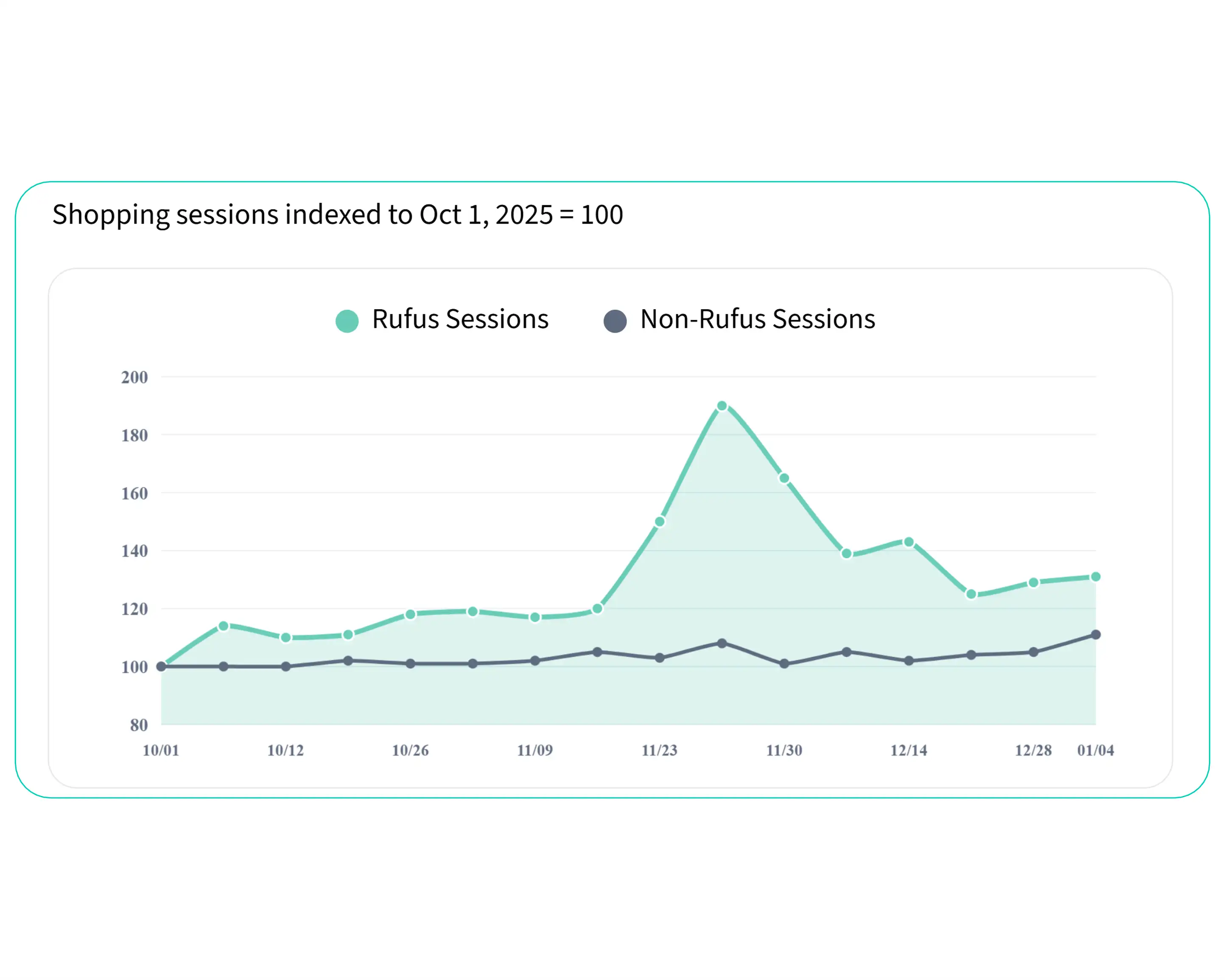
Tracking 60,000 dedicated U.S. shoppers on Amazon across the 2025–2026 sales season, one signal consistently stood out: when shoppers engage with Rufus, they behave differently. Not slightly different, but fundamentally different. During the holiday surge, Rufus-driven sessions climbed nearly 90% from October 2025 levels, while non-Rufus activity was almost stagnant. The spike in shopping wasn’t just more traffic, it was more intent-driven behavior across engagement, and purchase activity.
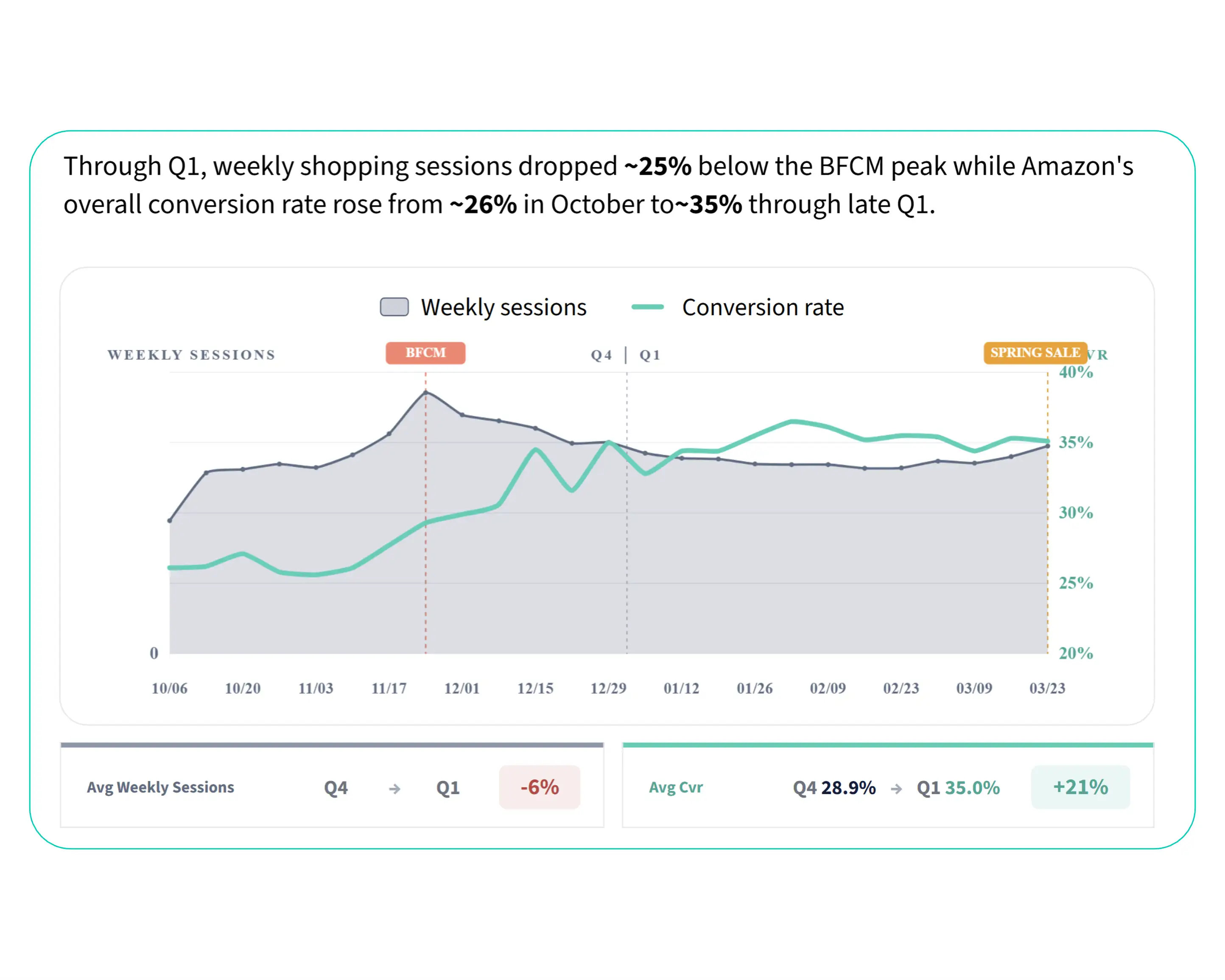
That distinction becomes even clearer post-holidays. In Q1 2025, total shopping sessions declined, but conversion rates jumped from 26% to 35%. Fewer visits, more purchases. The reason? High volume, high ambiguity during the holiday season. Shoppers shifted from browsing and wish-listing to buying. The same users who were casually comparing gifts in December returned with specific needs in January, and Rufus aligned perfectly with that mindset.
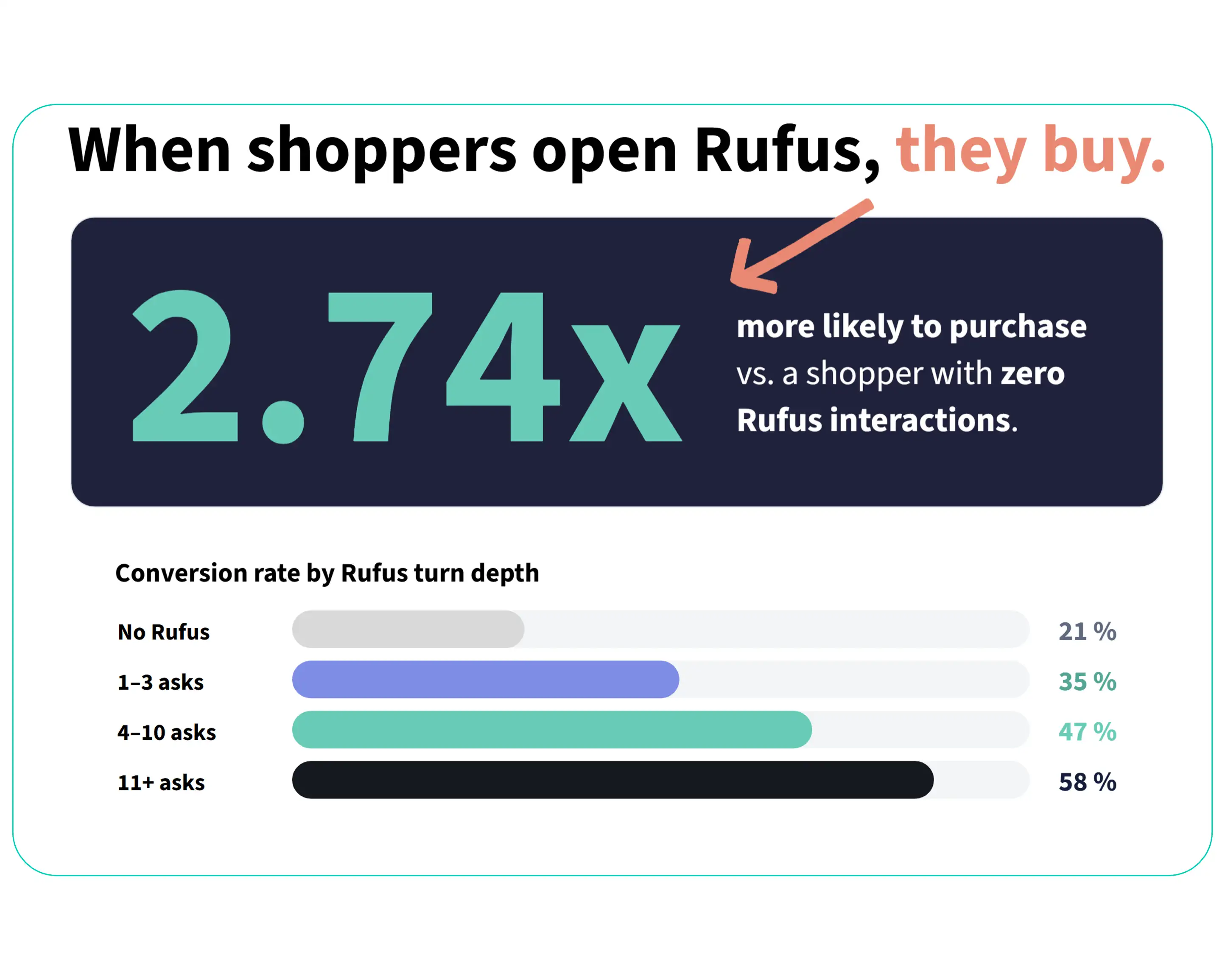
The impact is measurable. Shoppers who interact with Rufus are 2.74× more likely to buy, with conversion rates climbing as engagement deepens. At the highest levels of interaction, more than half of sessions result in a purchase. This isn’t just a feature driving incremental gains, it’s a clear indicator of high-intent behavior. Even among Amazon’s most active users, Rufus functions less as a discovery tool and more as a decision accelerator, helping shoppers confirm choices and complete purchases faster.
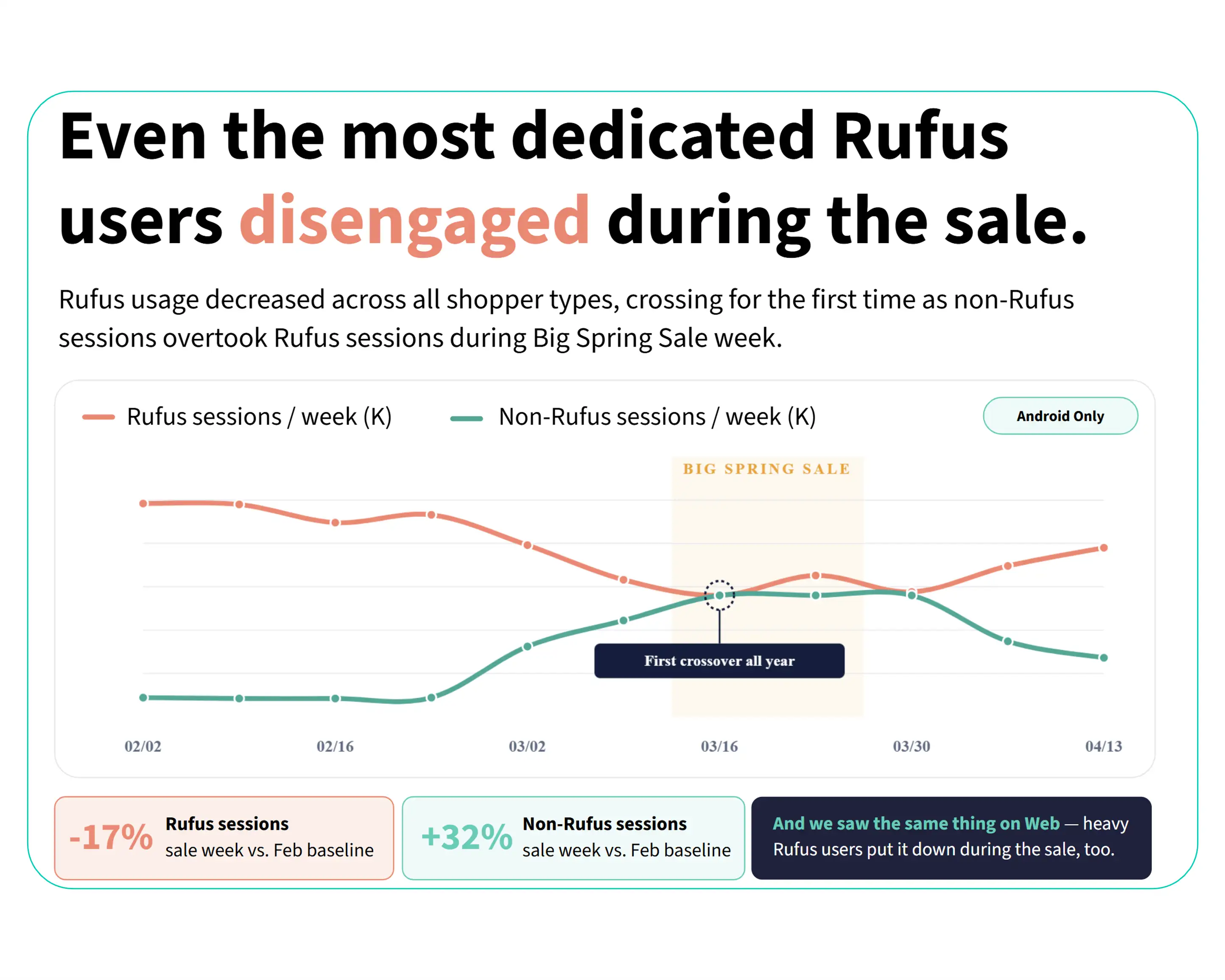
But that signal isn’t constant. During Amazon’s Big Spring Sale, even heavy Rufus users temporarily abandoned it. Rufus engagement dropped while traditional browsing surged, reinforcing a key dynamic: when shoppers are deal-hunting, they don’t engage in search. They’re not there to research or investigate. They’re there to browse, to meander, to check out the shelves, and when they’re done, many just leave, no conversion. Across the board, conversion rates softened. The intent signal weakened because the mindset changed.
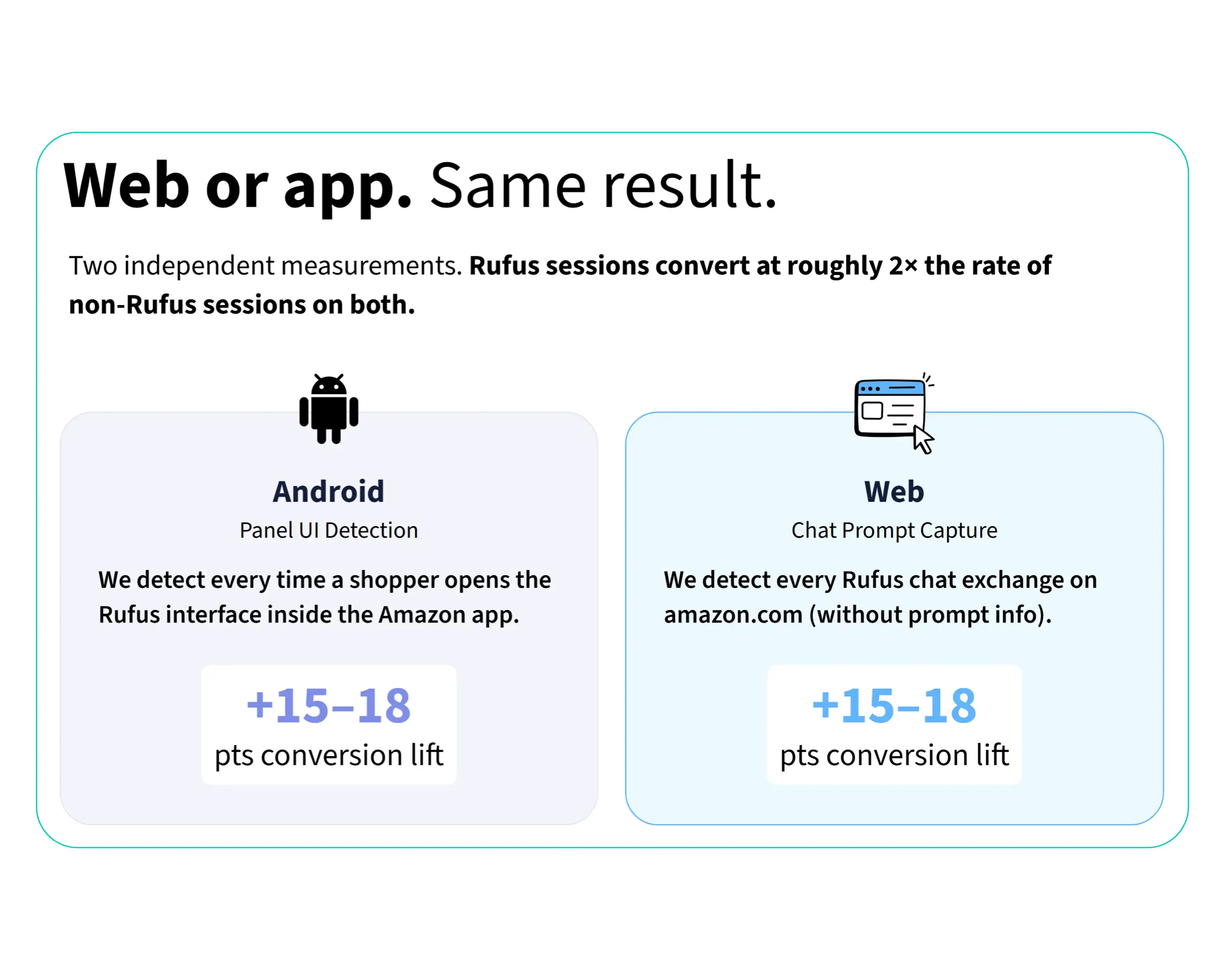
Across both web and app environments, the pattern holds. Rufus sessions consistently deliver roughly double the conversion rate of non-Rufus sessions, confirming that this isn’t about platform mechanics, it’s about shopper intent. Rufus doesn’t create demand; it reveals it.
The takeaway is straightforward. Rufus identifies the moments that matter most - the points where shoppers move from consideration to decision. For brands, that moment is critical. Because when a shopper opens Rufus, they’re not just browsing, they’re choosing.
Want to learn more about how Rufus is affecting how shoppers behave and purchase? We've got you covered. Click below to learn more.